
Estimated reading time: 4 minutes
- Can tarot tell you if someone is cheating?
- Tarot cards associated with cheating
- Cards that suggest loyalty and faithfulness
- How to read cheating cards in context
- A tarot spread for trust in a relationship
- If you suspect cheating
- Frequently asked questions
- Trust yourself first
When trust feels shaky in a relationship, it is natural to look for answers anywhere, including the tarot. Many people search for tarot cards for cheating because they want to know whether a nagging feeling is real. Tarot can help you explore your feelings, the dynamics in your relationship and what you need, but it cannot prove an affair. In this guide we cover the tarot cards most often associated with cheating and deception, how to read them in context, a trust spread, and how to handle suspicions in a healthy way.
Can tarot tell you if someone is cheating?
Tarot reflects energy and possibilities, not verified facts. A card linked to deception might point to a partner's secret, but it could just as easily reflect your own fear, a friend's gossip or something you are hiding from yourself. Our guide to tarot ethics explains why readings about another person's private actions need extra care. Use the cards to understand the situation and your next step, not as evidence.
Tarot cards associated with cheating
| Card | Possible meaning in a trust reading |
|---|---|
| Seven of Swords | Deception, secrecy, someone getting away with something |
| The Moon | Hidden information, illusion, confusion, insecurity |
| Three of Swords | Heartbreak, betrayal, painful truth |
| The Devil | Temptation, obsession, unhealthy attachment |
| Two of Cups reversed | Imbalance or a break in a partnership |
| Lovers reversed | Disharmony, a values clash, poor choices in love |
| Five of Cups | Grief and regret after a loss of trust |
| Page of Swords | Spying, gossip, information coming to light |
| Knight of Cups reversed | A charming but unreliable romantic figure |
| Three of Cups reversed | A third party, or friendships crossing a line |
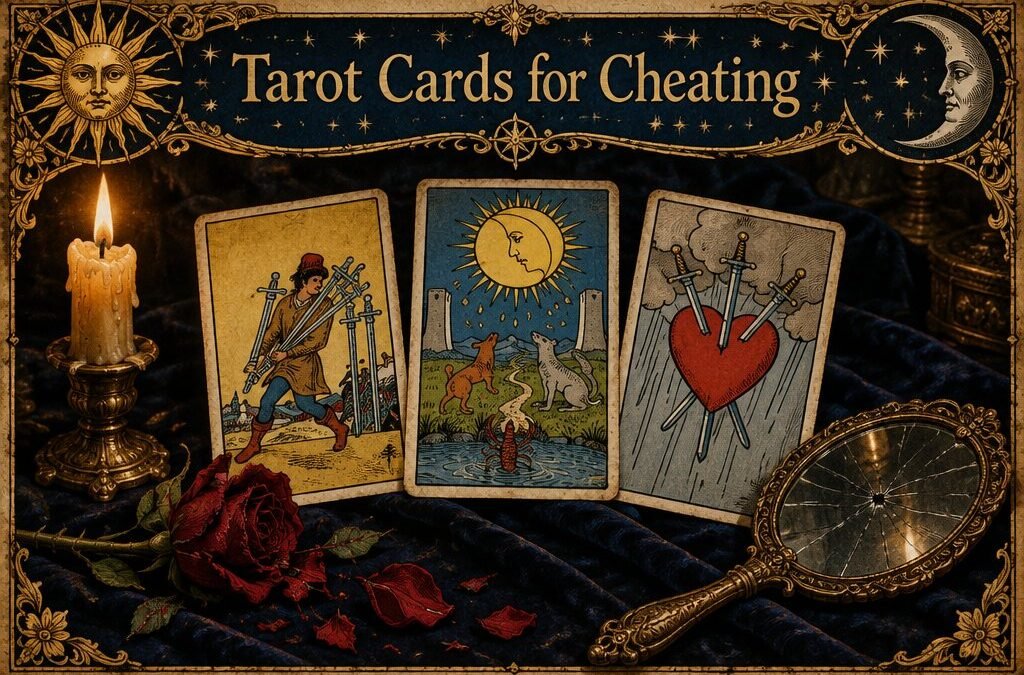
Seven of Swords
The card most often linked to cheating. A figure sneaks away with stolen swords, suggesting secrecy and getting away with something. In context, it may also mean someone is avoiding a difficult conversation. Read more on the Seven of Swords page.
The Moon
The Moon is about what is unclear. It can point to hidden information, but it is equally a card of anxiety and imagination. When it appears, the message is often "you do not have the full picture yet."
Three of Swords
The classic heartbreak card. It can indicate betrayal, but also any painful truth or loss. Look at nearby cards to understand the cause.
The Devil
The Devil points to temptation, lust and compulsive patterns. In a relationship reading it may reflect a strong pull toward someone else, or simply unhealthy dynamics within the couple.
Three of Cups reversed
The upright Three of Cups is friendship and celebration. Reversed, it can suggest a third person entering the picture, or social situations that cause jealousy.
Cards that suggest loyalty and faithfulness
Seeing these in a trust reading is reassuring:
- Two of Cups: mutual commitment and connection.
- Four of Wands: stability, home, celebration.
- Ten of Cups: emotional fulfillment and family.
- The Hierophant: commitment and traditional values.
- Queen and King of Cups: emotional maturity and devotion.
How to read cheating cards in context
- Check your question. "Is my partner cheating?" invites fear. "What do I need to know about trust in my relationship?" gives more useful answers.
- Look at surrounding cards. A Seven of Swords next to the Page of Swords suggests information coming out. Next to the Nine of Swords, it may describe your anxiety rather than an actual secret.
- Consider who the card is about. Deception cards can point to you, to your partner, or to someone outside the relationship.
- Watch for The Moon and the Nine of Swords together. They often reflect worry and imagination running ahead of the facts.
- Avoid repeating the reading. Asking again and again rarely gives clarity; it usually feeds anxiety.
A tarot spread for trust in a relationship
- What I am feeling about this relationship.
- What is causing my doubt.
- What I may not be seeing clearly.
- What my partner needs me to understand.
- What would rebuild trust.
- What I need to protect myself.
You can also explore the dynamic with our free Relationship Tarot Spread.
If you suspect cheating
Tarot can open the conversation with yourself, but real answers come from real conversations:
- Note what you have actually observed, separate from what you fear.
- Talk to your partner calmly using "I feel" statements.
- Consider couples counseling if trust has been damaged.
- Lean on trusted friends rather than carrying it alone.
- Prioritize your safety and wellbeing. If you feel unsafe, contact local support services.
If the relationship has already ended, our guide to breakup tarot cards may help you understand what the cards are saying about healing.
Frequently asked questions
What tarot card means cheating?
The Seven of Swords is most commonly associated with cheating and deception. The Moon, Three of Swords, The Devil and Three of Cups reversed can also point to secrets or betrayal.
Does the Lovers card reversed mean cheating?
Not necessarily. The Lovers reversed usually indicates disharmony, a values clash or a difficult choice. It may relate to infidelity only when surrounded by cards of deception.
Can a tarot reading prove someone is unfaithful?
No. Tarot can highlight concerns and patterns, but it cannot prove anything. Use it to clarify your feelings and next steps, not as evidence.
Which cards show a faithful partner?
The Two of Cups, Four of Wands, Ten of Cups, The Hierophant and the Queen or King of Cups all suggest loyalty and commitment.
Trust yourself first
If the cards bring up fears, treat them as a prompt for honest conversation and self-care, not as a verdict. For gentle clarity on your next step, try a free Three Card Tarot reading focused on what you need right now.