
Estimated reading time: 4 minutes
- An important note
- Why calming crystals can help you feel calmer
- 9 crystals traditionally used for calm
- Calming crystals at a glance
- Simple calming rituals with crystals
- Crystals and the chakras
- Frequently asked questions
- Choose your calm
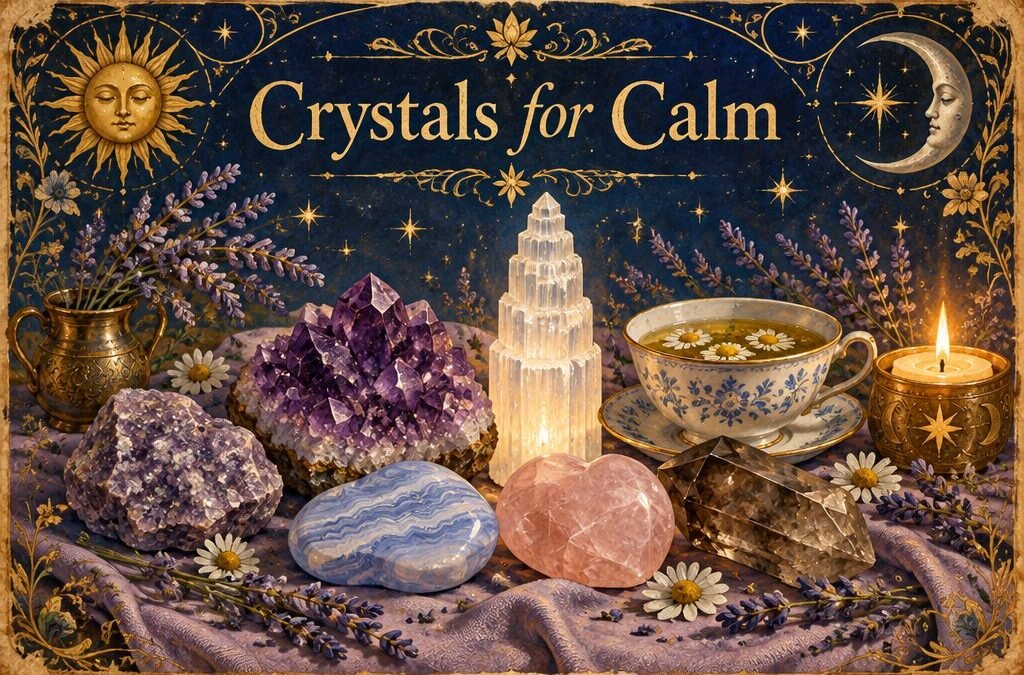
When life feels overwhelming, small rituals can help us pause, breathe and come back to the present. For many people, holding a smooth, cool crystal is one of those rituals. Calming crystals are traditionally associated with peace, emotional balance and grounding, and while their effects are spiritual rather than medical, the simple act of holding one, breathing slowly and setting an intention can be genuinely soothing. Here are nine crystals traditionally used for anxiety and stress, how to use them, and a gentle reminder about when to reach out for more support.
An important note
Crystals are not a treatment for anxiety disorders or any medical or mental health condition. If anxiety is affecting your daily life, sleep or relationships, please talk to a doctor, therapist or counselor. If you are in crisis, contact your local emergency number or a crisis helpline. Crystals can be a comforting addition to self-care, never a replacement for professional help.
Why calming crystals can help you feel calmer
Whatever you believe about crystal energy, there are practical reasons they can support calm:
- Grounding through touch. Focusing on the weight, texture and temperature of a stone brings attention back to the present moment.
- A cue for breathing. Holding a crystal can become a reminder to slow your breath.
- A visible intention. A stone on your desk is a small daily reminder to look after yourself.
- Ritual and comfort. Repeated, gentle rituals create a sense of safety.
9 crystals traditionally used for calm
1. Amethyst
The classic calming stone. Purple amethyst is associated with peace, clarity and restful sleep, and is a favorite to keep by the bed.
- Use it for: quieting a busy mind, winding down at night.
2. Lepidolite
Lilac lepidolite naturally contains lithium and is known as a stone of emotional balance and transition.
- Use it for: times of change, feeling unsettled.
- Care: it is soft; keep it away from water.
3. Blue lace agate
Pale blue with delicate bands, blue lace agate is associated with gentle calm and calm communication, and with the throat chakra.
- Use it for: speaking calmly, nerves before conversations or presentations.
4. Rose quartz
Rose quartz brings gentleness and self-compassion, helpful when anxiety comes with self-criticism.
- Use it for: being kind to yourself on hard days.
5. Smoky quartz
Smoky quartz is a grounding stone, traditionally used to release tension and feel steady.
- Use it for: feeling scattered or "up in your head."
6. Black tourmaline
A protective, grounding stone associated with shielding from negativity and stress.
- Use it for: busy or tense environments, after stressful days.
7. Howlite
White howlite with gray veins is associated with patience and a calm, relaxed mind.
- Use it for: impatience, irritability, trouble switching off.
8. Moonstone
Linked with the moon's cycles, moonstone is associated with emotional balance and gentle intuition. Our guide to moon phases pairs well with it.
- Use it for: emotional ups and downs.
9. Selenite
Selenite is associated with peace, clarity and cleansing. Its soft glow makes a calming presence in a room.
- Use it for: creating a peaceful space.
- Care: never put selenite in water.
Calming crystals at a glance
| Crystal | Traditionally associated with | Water safe? |
|---|---|---|
| Amethyst | Peace, clarity, sleep | Yes, briefly |
| Lepidolite | Emotional balance, transition | No |
| Blue lace agate | Calm communication | Yes, briefly |
| Rose quartz | Self-compassion | Yes, briefly |
| Smoky quartz | Grounding, releasing tension | Yes, briefly |
| Black tourmaline | Protection, grounding | Avoid soaking |
| Howlite | Patience, relaxation | Avoid soaking |
| Moonstone | Emotional balance | Yes, briefly |
| Selenite | Peace, cleansing | No |
Simple calming rituals with crystals
The 4-7-8 stone breath
Hold a crystal in your palm. Breathe in for 4 counts, hold for 7, and breathe out slowly for 8. Repeat four times, focusing on the feel of the stone.
5-4-3-2-1 grounding
Holding a grounding stone such as smoky quartz, name 5 things you can see, 4 you can touch (including the crystal), 3 you can hear, 2 you can smell and 1 you can taste.
A pocket stone
Carry a small tumbled stone in your pocket. When you feel tension rising, hold it and take three slow breaths.
Bedtime wind-down
Place amethyst or lepidolite on your nightstand. Before sleep, hold it, write down three things that went well today, and set your worries aside on paper for tomorrow.
A calm corner
Create a small space with a soft cushion, a candle, a calming crystal and a journal. Go there when you need a few quiet minutes.
Crystals and the chakras
Calming stones are often linked to specific chakras: amethyst to the crown, blue lace agate to the throat, smoky quartz and black tourmaline to the root. If you are curious, read The 7 Chakras Explained or try our free Chakra Tarot reading to reflect on where your energy feels balanced or stretched.
Frequently asked questions
What is the best crystal for anxiety?
Amethyst is the most popular crystal traditionally associated with calm and peace. Lepidolite and blue lace agate are also widely used for a soothing effect. They are best used as part of self-care, not as a treatment.
Can crystals cure anxiety?
No. Crystals cannot cure anxiety or any medical condition. Many people find them comforting as part of grounding and self-care routines, alongside professional support where needed.
Where should I keep a calming crystal?
Keep it wherever you most need calm: by your bed, on your desk, in your pocket or in a quiet corner of your home.
How do I cleanse calming crystals?
Moonlight, sound and a selenite slab are gentle methods that suit most stones. Avoid water for lepidolite, selenite and other soft or porous crystals.
Choose your calm
Pick one stone that feels soothing to you, pair it with a simple breathing ritual, and give yourself a few quiet minutes each day. And please remember: if anxiety feels too heavy to carry alone, reaching out for support is a sign of strength. For a gentle daily reflection, try our free Daily Tarot.