
Estimated Reading Time: 7 minutes
Table of Contents
- Getting Started with Tarot: Choose Your Deck and Create Your Space
- Building Your Intuition: The Importance of Intention
- Understanding the Structure: Major Arcana vs. Minor Arcana
- Basic Reading Techniques to Get You Started
- Interpreting Tarot Cards: Quick Techniques for Beginners
- Tips for Beginners: Cultivating Your Tarot Reading Skills
- Invitation to Explore Further
Getting Started with Tarot: Choose Your Deck and Create Your Space
Selecting Your Tarot Deck
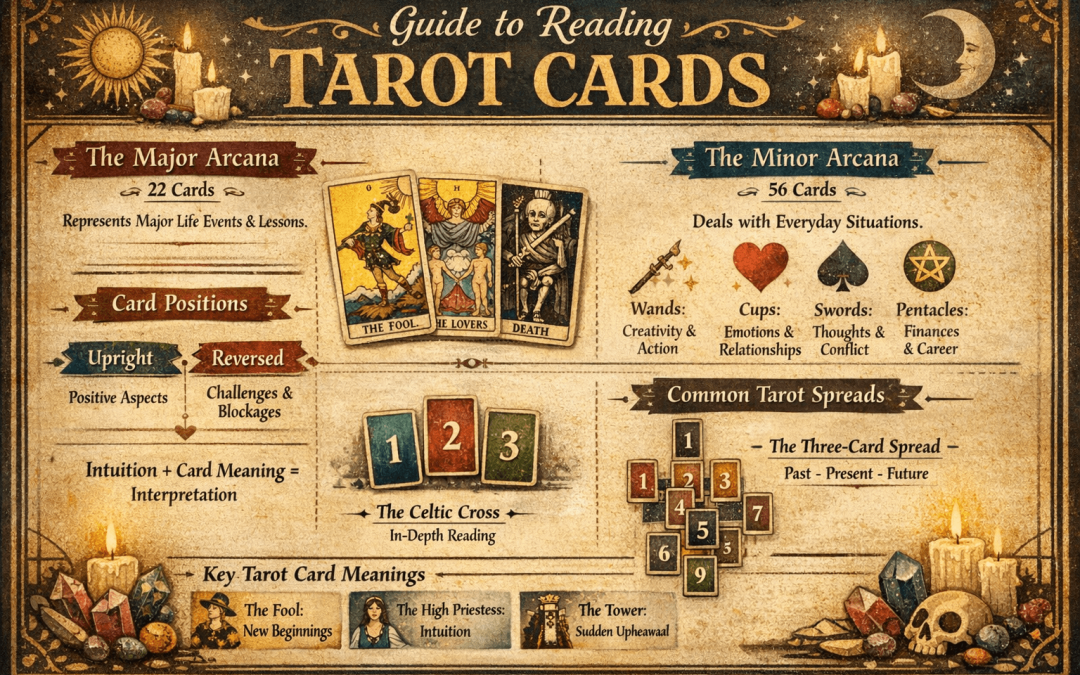
For those new to tarot, the Rider-Waite deck is highly recommended. This classic deck showcases detailed imagery that can enhance your intuitive understanding of the cards. It consists of 78 cards divided into the Major Arcana (22 cards, numbered 0-21) and the Minor Arcana (56 cards distributed across four suits). Major Arcana cards represent significant life themes and spiritual lessons—think of The Fool symbolizing new beginnings or The Tower foreshadowing upheaval. Familiarizing yourself with these images will help in developing deeper insights as you grow in your practice.
Creating a Sacred Reading Space
Before pulling cards, it’s essential to establish a peaceful and sacred environment. This can be a quiet corner of your home or a spot in nature where you feel calm and centered. Consider lighting a candle, burning incense, or playing soft music to set the mood. Engaging your senses can help ground your energy and focus your intention.
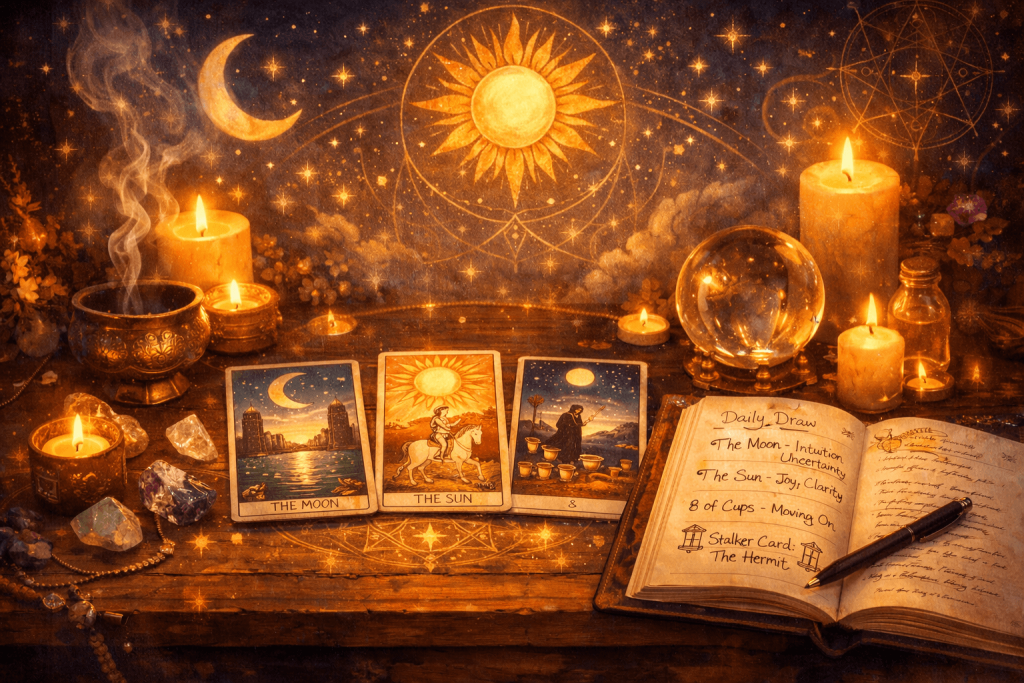
Lastly, a tarot journal is an invaluable tool for beginners. Use it to record daily pulls, insights, reflections, and recurring cards, often referred to as "stalker cards," which can provide meaningful information over time.
Building Your Intuition: The Importance of Intention
When you sit down to read tarot, shuffle your deck while focusing on your specific question or intention. It’s crucial to "clear" the energy of the deck so that you can connect intuitively. Pay attention to the feelings, colors, symbols, shapes, and imagery on the cards rather than relying solely on memorization. Remember, your intuition is key here. Over time, you’ll find that you’ll begin to trust what you feel.
Understanding the Structure: Major Arcana vs. Minor Arcana
To simplify your reading experience, begin with just the Major Arcana cards. These cards capture significant life events and soul lessons. You might want to pull one card in the morning while contemplating a question or theme for the day, allowing yourself to explore its meaning fully, comparing your impressions to a guidebook later.
Once you feel comfortable, gradually incorporate the Minor Arcana cards. These cards can offer insights into daily situations and experiences, revealing how we engage with the world around us.
Basic Reading Techniques to Get You Started
One-Card Reading
This is the simplest form of tarot reading. Shuffle the deck while focusing on a question, pull one card, and interpret its meaning. If the card appears upright, it can generally signify a "yes" or positive energy; if reversed, it may indicate a "no," blockage, or challenge. Reflect on the imagery and your feelings about the card, relating it to your question.
Three-Card Spread
This spread helps to delve a bit deeper. Split the shuffled deck into three face-down piles, then reveal the top cards to represent past, present, and future or people, places, and things. Pay attention to how the cards relate to each other and the emotions they evoke.
Four-Card Check-In
Draw one Major Arcana card as your signifier, representing your current self or theme. Then, pull three Minor Arcana cards that correspond to your physical, mental, and spiritual realms.
For quick yes/no readings, you can also pull one card (upright=yes, reversed=no), or use three cards to decide by majority.
Interpreting Tarot Cards: Quick Techniques for Beginners
When interpreting tarot cards, ground your analysis in the imagery first. Notice any repetitive shapes or symbols, dominant colors, and the overall emotional response to the card. It might be helpful to cross-reference with traditional meanings to develop a rounded understanding of the card’s implications.
Spend time with each card by revisiting your interpretations throughout the day. Patterns may emerge, offering deeper insights that resonate with your life experiences.
Tips for Beginners: Cultivating Your Tarot Reading Skills
- Practice Daily: Engage in personal readings before offering insights to others. This builds your confidence and intuition.
- Start with Simple Spreads: As a beginner, avoid complex spreads that may overwhelm you. Focus on one or three-card spreads to build a strong foundation.
- Use Resources: Books like The Language of Tarot offer insights through “recipes” for card combinations, while online guides provide full meanings.
- Embrace Patience: Tarot is a reflection of inner work and self-exploration, rather than just predictions about the future. Allow the practice to evolve naturally.
Invitation to Explore Further
As you embark on your journey of tarot reading, remember that practice and intuition will be your best allies. Over time, you’ll discover your unique approach to the cards and deepen your connection to their wisdom. The transformative power of tarot can provide insights, not only into your current circumstances but also into your personal growth and spiritual evolution.
Are you ready to dive deeper into your tarot practice? Consider booking a personalized tarot reading with our expert guides who can offer additional insights tailored to your life. You can also explore our educational offerings and join our mailing list to receive more resources and updates. Your journey toward intuitive guidance starts here!
Embrace the magic and let your intuition guide you as you learn how to read tarot cards. Happy reading!