
Estimated reading time: 5 minutes
- The eight sabbats at a glance
- Samhain: the witches' new year
- Yule: the return of the light
- Imbolc: the first stirrings of spring
- Ostara: balance and new growth
- Beltane: passion and abundance
- Litha: the peak of the sun
- Lughnasadh (Lammas): the first harvest
- Mabon: the second harvest
- How to use tarot through the Wheel of the Year
- Frequently asked questions
- Turn the wheel with intention
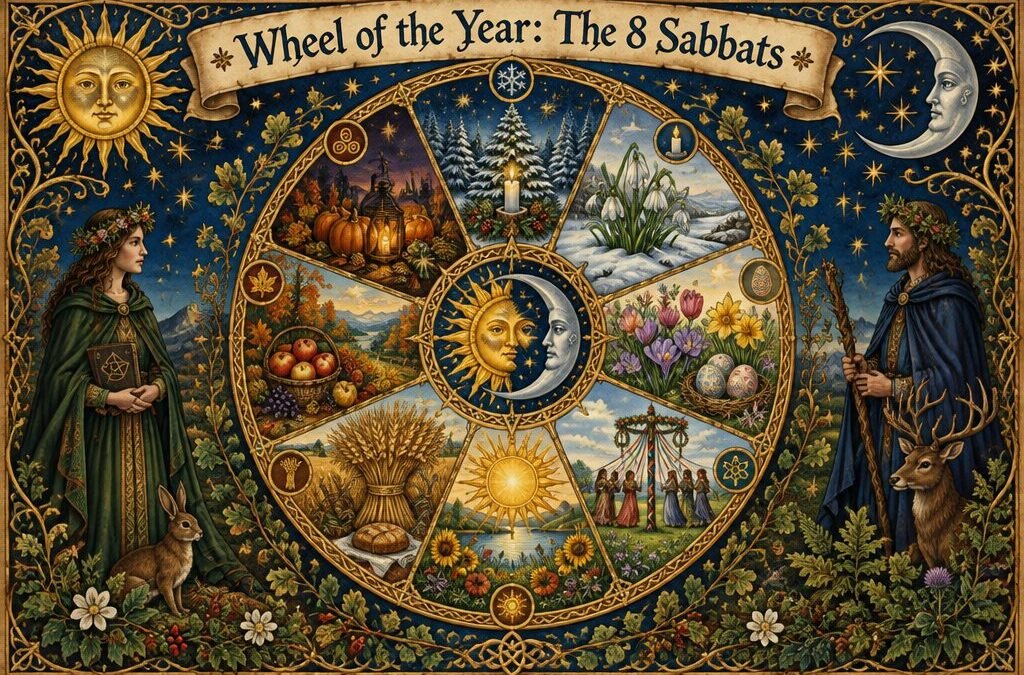
The Wheel of the Year is a cycle of eight seasonal festivals, called sabbats, celebrated by many modern pagans, witches and nature-loving spiritual people. It weaves together the four solar points of the year (the two solstices and two equinoxes) with four older fire festivals that fall roughly halfway between them. Following the Wheel of the Year is a simple, grounding way to live in step with the seasons: planting intentions when the light returns, celebrating abundance in summer, and turning inward as the nights grow long. Here are the eight pagan sabbats, their dates, what each one means, and a tarot card and small ritual for every turn of the wheel.
The eight sabbats at a glance
Dates below are for the Northern Hemisphere. Solstice and equinox dates shift by a day or so each year. In the Southern Hemisphere the wheel is turned by six months, so Samhain is celebrated around May 1 and Beltane around October 31.
| Sabbat | Approximate date | Season's theme |
|---|---|---|
| Samhain | October 31 to November 1 | Endings, ancestors, the witches' new year |
| Yule (winter solstice) | December 20 to 22 | Rebirth of the sun, rest, hope |
| Imbolc | February 1 to 2 | First stirrings of spring, purification |
| Ostara (spring equinox) | March 19 to 21 | Balance, renewal, new growth |
| Beltane | April 30 to May 1 | Fertility, passion, abundance |
| Litha (summer solstice) | June 20 to 22 | Peak of the sun, celebration, power |
| Lughnasadh / Lammas | August 1 | First harvest, gratitude, skill |
| Mabon (autumn equinox) | September 21 to 23 | Second harvest, balance, thanksgiving |
The four "quarter days" (Yule, Ostara, Litha, Mabon) are astronomical events. The four "cross-quarter" days (Samhain, Imbolc, Beltane, Lughnasadh) come from Gaelic and Celtic tradition. Together they form the wheel used in modern Wicca and many other pagan paths.
Samhain: the witches' new year
Samhain marks the end of the harvest and the beginning of the dark half of the year. It is a time to honor ancestors, release what the past year has finished, and practice divination while the veil feels thin.
- Tarot card: Death, for natural endings and transformation.
- Simple ritual: light a candle for loved ones who have passed and write down one thing you are ready to release.
Our full Samhain tarot spread offers six cards for honoring the old year and planting a seed for the new one.
Yule: the return of the light
At the winter solstice, the longest night of the year, the sun is "reborn" and the days slowly begin to lengthen. Yule is a festival of rest, warmth, evergreens and hope in the darkest season.
- Tarot card: The Sun, for the light returning, or The Hermit for quiet reflection on the longest night.
- Simple ritual: stay up to greet the sunrise after the solstice, or light a candle at dusk and let it burn safely for as long as you are home.
Imbolc: the first stirrings of spring
Imbolc is associated with the Irish goddess and saint Brigid, with hearth fires, milk and the very first signs of spring. It is a time to clean, clear and prepare the ground for new beginnings.
- Tarot card: The Star, for hope, healing and renewal after winter.
- Simple ritual: spring-clean one space in your home and set a small intention for the months ahead.
Ostara: balance and new growth
At the spring equinox, day and night are roughly equal, and from here the light wins. Ostara celebrates fertility, eggs, seeds and the green energy of spring.
- Tarot card: Ace of Wands, for fresh inspiration and the spark of new projects.
- Simple ritual: plant seeds, literally or symbolically, by writing your goals on paper and placing them in a plant pot.
Beltane: passion and abundance
Beltane is the great fire festival of early summer, traditionally celebrated with bonfires, maypoles, flowers and love. It honors fertility, creativity and the joy of being alive.
- Tarot card: The Empress, for abundance, sensuality and blossoming creativity, or The Lovers for union and desire.
- Simple ritual: gather flowers, make a small crown or bouquet, and spend time outdoors doing something that makes you feel alive.
Litha: the peak of the sun
The summer solstice is the longest day of the year. Litha celebrates the sun at its strongest, as well as success, vitality and the courage to shine.
- Tarot card: The Sun, for joy, success and full visibility.
- Simple ritual: watch the sunrise or sunset, and celebrate one thing you have achieved since the winter solstice.
Lughnasadh (Lammas): the first harvest
Named for the Celtic god Lugh and also known as Lammas ("loaf mass"), this festival celebrates the first grain harvest. It is about gratitude, skill and the rewards of hard work.
- Tarot card: Seven of Pentacles, for patience and reaping what you have sown.
- Simple ritual: bake or share bread and name three things you are grateful for this year.
Mabon: the second harvest
At the autumn equinox, day and night are balanced again before darkness takes over. Mabon is a thanksgiving festival, a time to finish projects, share abundance and prepare for winter.
- Tarot card: Temperance, for balance and moderation, or Ten of Pentacles for abundance shared with family.
- Simple ritual: take stock of the year: what has grown, what is ready to be harvested, and what needs to be put away.
How to use tarot through the Wheel of the Year
Tarot and the wheel make natural companions, because both are about cycles. Here are a few ways to combine them:
- A reading at every sabbat. Eight readings a year give you a lovely rhythm of reflection. A simple three-card spread works well: What is ending / What is growing / What to focus on until the next sabbat.
- A year-long journal. Record your sabbat readings in one notebook and compare them each year.
- A card of the season. Pull one card at each sabbat to be your guide for the six weeks until the next one.
- Seasonal altars. Place your sabbat card on a small altar with seasonal flowers, stones and candles.
If you want a quick daily touchpoint between sabbats, our free Daily Tarot draws one card each day with guidance for love, money and career.
Frequently asked questions
Do I have to be pagan to celebrate the Wheel of the Year?
No. Many people follow the Wheel of the Year simply to feel more connected to nature and the seasons. You can celebrate as much or as little as feels right.
Which sabbat is the pagan new year?
Many modern pagans and witches treat Samhain (October 31) as the new year, since it marks the start of the dark half of the year in the Celtic calendar. Others start the wheel at Yule or Imbolc.
Why are the dates different in the Southern Hemisphere?
The sabbats follow the seasons, so in the Southern Hemisphere they are shifted by six months. Yule is celebrated in June and Litha in December.
Turn the wheel with intention
The Wheel of the Year reminds us that every ending leads to a beginning and that rest is as important as growth. Pick the next sabbat on the calendar, choose a card to guide you, and let the seasons set the pace of your practice.