
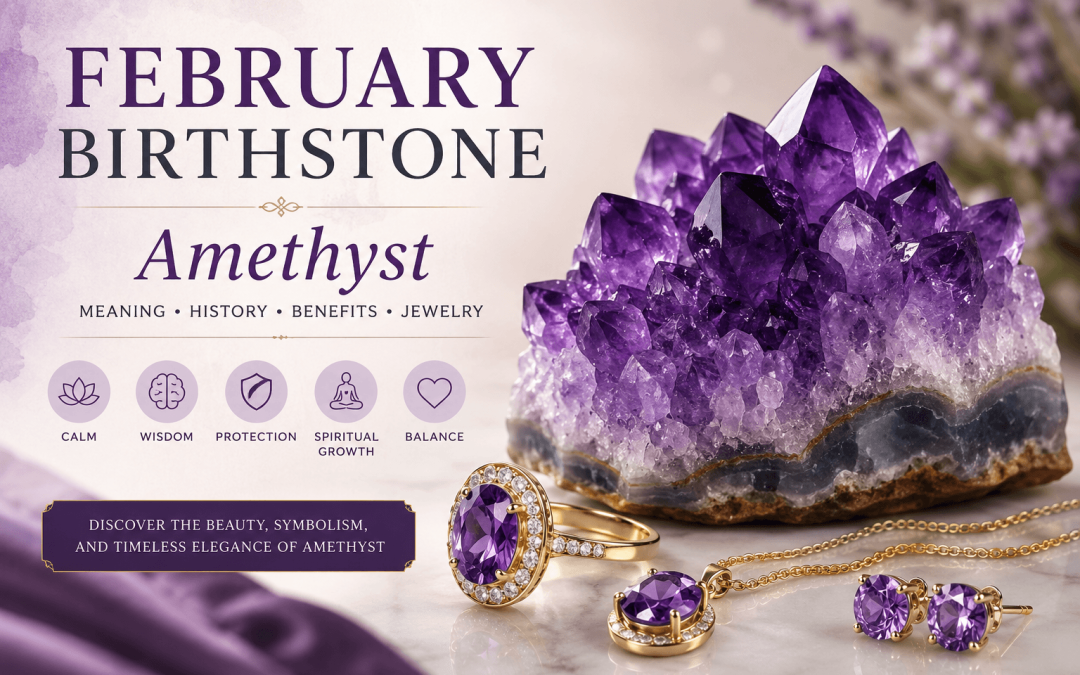
The February birthstone is Amethyst, one of the world's most recognizable and beloved gemstones. Famous for its captivating shades of purple, Amethyst has fascinated civilizations for thousands of years. Once considered as valuable as diamonds, rubies, and emeralds, this beautiful quartz gemstone has become one of today's most accessible luxury gems while retaining its royal reputation.
Whether you're searching for the perfect birthday gift, curious about birthstone traditions, interested in gemstone symbolism, or simply wondering why Amethyst is associated with February, this complete guide covers everything you need to know.
You'll discover Amethyst's fascinating history, geological formation, symbolic meaning, healing traditions, zodiac connections, jewelry recommendations, pricing, care instructions, and answers to the most frequently asked questions.
What Is the February Birthstone?
The official birthstone for February is Amethyst, a stunning purple variety of quartz composed primarily of silicon dioxide.
Its color ranges from delicate lavender to deep royal purple, with the finest specimens displaying rich violet hues and flashes of red or blue under different lighting conditions.
Amethyst is admired because it combines:
- Exceptional beauty
- Excellent durability
- Rich historical significance
- Spiritual symbolism
- Affordable pricing
- Wide availability
Today it remains one of the most popular colored gemstones worldwide.
Why Is Amethyst the Birthstone for February?
The tradition of birthstones dates back thousands of years and evolved through various religious, cultural, and historical influences before becoming standardized in modern jewelry.
Amethyst became associated with February because it symbolized qualities traditionally connected with people born during the month:
- Wisdom
- Clarity
- Inner peace
- Balance
- Loyalty
- Spiritual awareness
- Self-control
Modern birthstone lists continue to recognize Amethyst as February's official gemstone, making it one of the oldest continuously recognized birthstones.
What Does Amethyst Mean?
Throughout history, Amethyst has represented both physical beauty and inner strength.
Its most common symbolic meanings include:
Calmness
Many cultures believed Amethyst helped quiet the mind during stressful situations.
Wisdom
Royal families, scholars, and religious leaders often wore Amethyst to symbolize intelligence and thoughtful decision-making.
Protection
Ancient civilizations considered the gemstone a protective talisman against negative influences.
Sobriety
The name "Amethyst" comes from the Greek word amethystos, meaning "not intoxicated." Ancient Greeks believed the stone protected its wearer from drunkenness and poor judgment.
Spiritual Growth
For centuries, Amethyst has been associated with meditation, mindfulness, and higher consciousness.
The History of Amethyst
Amethyst has one of the richest histories of any gemstone.
Ancient Egypt
Egyptians carved Amethyst into jewelry, amulets, and protective charms believed to guard against harm.
Ancient Greece
Greek mythology tells the story of a young woman named Amethyst, who was transformed into white quartz to protect her from danger. The wine god Dionysus later spilled wine onto the crystal, turning it purple.
This legend inspired the belief that Amethyst prevented intoxication.
Ancient Rome
Romans wore Amethyst rings, carved drinking vessels from it, and considered it a symbol of wealth and nobility.
The Middle Ages
European royalty treasured Amethyst because purple represented power and authority.
Kings and queens decorated crowns, scepters, and ceremonial jewelry with large Amethyst gemstones.
Religious Importance
Christian bishops traditionally wore Amethyst rings because the gemstone symbolized humility, purity, and spiritual wisdom.
Many religious artifacts still feature Amethyst today.
How Is Amethyst Formed?
Amethyst forms naturally inside volcanic rocks and geodes.
Millions of years ago, mineral-rich water entered cavities within cooling lava. As the water slowly evaporated, silica crystals developed.
Tiny traces of iron combined with natural radiation produced Amethyst's distinctive purple coloration.
Because the formation process occurs over extremely long periods, every crystal develops unique internal patterns.
No two Amethysts are completely identical.
Where Is Amethyst Found?
Amethyst deposits exist worldwide.
Some of the most famous sources include:
Brazil
Brazil produces enormous Amethyst geodes and commercial-quality gemstones.
Uruguay
Uruguayan Amethyst is famous for its deep, saturated purple color.
Zambia
Zambian Amethyst often displays rich violet tones with exceptional clarity.
Bolivia
Bolivia produces unusual Amethyst varieties, including Ametrine—a natural combination of Amethyst and Citrine.
Russia
Historically, Russian Amethyst was considered among the world's finest gemstones.
Canada
Several Canadian mines produce beautiful high-quality specimens.
United States
Amethyst can also be found in Arizona, North Carolina, Pennsylvania, and other states.
What Color Is the February Birthstone?
Although people simply call it "purple," Amethyst actually appears in numerous shades.
These include:
Pale Lilac
Soft pastel tones perfect for delicate jewelry.
Lavender
Elegant light purple with subtle brilliance.
Violet
The classic Amethyst appearance.
Deep Purple
Rich royal coloration highly valued in fine jewelry.
Reddish Purple
Displays flashes of red under certain lighting.
Bluish Purple
Highly sought after among collectors.
The most valuable stones usually feature vivid, evenly distributed purple color without noticeable zoning.
Amethyst Hardness and Durability
Amethyst scores 7 on the Mohs hardness scale.
This means it is durable enough for:
- Rings
- Necklaces
- Earrings
- Bracelets
- Pendants
- Everyday jewelry
However, it should still be protected from hard impacts and scratches from harder gemstones like diamonds or sapphires.
Is Amethyst Valuable?
Amethyst offers exceptional value.
Unlike many precious gemstones, beautiful Amethyst is relatively affordable because large deposits exist worldwide.
Price depends on several factors.
Color
Deep, vibrant purple stones command higher prices.
Clarity
Eye-clean gemstones without visible inclusions are more desirable.
Cut
Excellent cutting enhances brilliance and sparkle.
Carat Weight
Larger gemstones become increasingly valuable when color and clarity remain high.
Origin
Some collectors specifically seek stones from famous mining regions.
February Birthstone Jewelry
Amethyst looks beautiful in nearly every jewelry style.
Popular options include:
Amethyst Rings
Perfect as birthday gifts, fashion rings, cocktail rings, or engagement ring alternatives.
Necklaces
A timeless everyday accessory suitable for both casual and formal occasions.
Earrings
Available as studs, drops, hoops, and statement pieces.
Bracelets
Combine Amethyst with diamonds, pearls, or other colored gemstones.
Pendants
Classic solitaire designs remain among the most popular choices.
Which Metals Pair Best with Amethyst?
Amethyst complements many precious metals.
White Gold
Creates a modern and elegant appearance.
Yellow Gold
Offers a luxurious vintage contrast.
Rose Gold
Produces a soft romantic look.
Sterling Silver
Provides an affordable contemporary style.
Platinum
Ideal for premium jewelry settings.
February Birthstone for Men
Amethyst isn't exclusively associated with women's jewelry.
Many men's accessories incorporate the gemstone, including:
- Signet rings
- Cufflinks
- Tie pins
- Bracelets
- Pendants
- Watches
Its sophisticated purple color symbolizes confidence, intelligence, and refinement.
Amethyst in Astrology and Zodiac Signs
Although Amethyst is February's birthstone, it is frequently associated with several zodiac signs.
These include:
Aquarius
Many believe Amethyst enhances creativity, intuition, and independent thinking.
Pisces
The gemstone is often linked with compassion, emotional balance, and spiritual awareness.
Some astrologers also recommend Amethyst for anyone seeking greater mental clarity regardless of zodiac sign.
Spiritual Meaning of Amethyst
Across numerous traditions, Amethyst is considered a stone of higher awareness.
It is commonly associated with:
- Peace
- Balance
- Patience
- Emotional healing
- Meditation
- Focus
- Positive energy
- Inner wisdom
Many people keep Amethyst crystals in homes, meditation spaces, or workplaces to create a calming environment.
These beliefs are spiritual traditions rather than scientifically proven effects.
Healing Properties Traditionally Associated with Amethyst
Many crystal enthusiasts believe Amethyst supports emotional well-being.
Traditional beliefs suggest it may encourage:
Emotional Balance
Helping reduce feelings of stress and overwhelm.
Better Sleep
Many people place Amethyst near their bed because of its calming reputation.
Mental Clarity
Often associated with improved focus and thoughtful decision-making.
Positive Energy
Believed to promote optimism and emotional resilience.
These associations come from historical and spiritual practices and should not be considered medical treatments.
Birthstone Alternatives for February
Although Amethyst is the official February birthstone, some people also choose gemstones based on personal preferences.
Popular alternatives include:
- Onyx
- Jasper
- Rose Quartz
- Fluorite
- Garnet
- Purple Sapphire
However, Amethyst remains the universally recognized birthstone for February.
How to Tell if an Amethyst Is Real
Authentic Amethyst typically displays:
- Natural color variation
- Excellent transparency
- Good brilliance
- Cool temperature when touched
- Slight internal inclusions in many natural stones
Professional gemological testing provides the most reliable identification.
Synthetic Amethyst also exists and shares the same chemical composition but is laboratory-created.
How to Care for Amethyst Jewelry
Proper care helps preserve its beauty for decades.
Cleaning
Use:
- Warm water
- Mild soap
- Soft brush
- Lint-free cloth
Avoid harsh chemicals and ultrasonic cleaning unless recommended for your jewelry setting.
Storage
Store Amethyst separately from harder gemstones to avoid scratches.
Soft jewelry pouches work well.
Sunlight
Extended exposure to intense sunlight may gradually fade some Amethyst over many years.
Store jewelry away from prolonged direct sunlight when not being worn.
Amethyst in Modern Fashion
Amethyst remains one of today's most versatile gemstones.
Designers frequently feature it in:
- Minimalist jewelry
- Vintage-inspired collections
- Luxury statement pieces
- Bridal jewelry
- Stackable rings
- Birthstone collections
- Personalized gifts
Its affordability allows larger gemstones to be incorporated into eye-catching designs without the price associated with many precious gems.
Why Amethyst Makes the Perfect Birthday Gift
There are many reasons why Amethyst remains one of the most popular birthday gifts for people born in February.
It combines:
- Beautiful color
- Rich symbolism
- Historical significance
- Everyday wearability
- Affordable luxury
- Timeless elegance
- Personal meaning
Whether presented as a simple pendant or an elaborate gemstone ring, it carries lasting sentimental value.
Interesting Facts About the February Birthstone
- Amethyst belongs to the quartz family.
- Ancient royalty once valued it as highly as diamonds.
- Large geodes can weigh several tons.
- Purple coloration develops through traces of iron and natural radiation.
- Leonardo da Vinci reportedly believed Amethyst enhanced intelligence and creativity.
- The gemstone has decorated royal crowns, churches, and ceremonial objects for centuries.
- It remains one of the world's most popular colored gemstones.
Frequently Asked Questions
What is the birthstone for February?
The official February birthstone is Amethyst, a purple variety of quartz known for its beauty, symbolism, and durability.
Is Amethyst expensive?
Compared with many precious gemstones, Amethyst is generally affordable while still offering excellent brilliance and color.
What does the February birthstone symbolize?
Amethyst traditionally represents wisdom, peace, protection, balance, clarity, loyalty, and spiritual growth.
Can Amethyst be worn every day?
Yes. With a hardness of 7 on the Mohs scale, Amethyst is suitable for everyday jewelry when cared for properly.
Which zodiac signs are connected with Amethyst?
Amethyst is most commonly associated with Aquarius and Pisces, though anyone can wear and enjoy the gemstone.
What is the rarest color of Amethyst?
The most prized Amethyst displays rich, evenly saturated royal purple with flashes of red or blue under different lighting.
Does February have more than one birthstone?
Modern birthstone charts officially recognize Amethyst as February's primary birthstone.
Is Amethyst a precious or semi-precious stone?
Today, Amethyst is classified as a semi-precious gemstone, although historically it was considered as valuable as traditional precious stones before large deposits were discovered.
Final Thoughts
The February birthstone, Amethyst, combines extraordinary beauty, fascinating history, deep symbolism, and exceptional versatility. Its royal purple color has captivated civilizations for thousands of years, while its accessibility makes it one of the best-value gemstones available today.
Whether you're celebrating a February birthday, choosing meaningful jewelry, exploring gemstone traditions, or simply appreciating nature's remarkable creations, Amethyst offers a unique blend of elegance and history that few gemstones can match. Its timeless appeal, durability, and rich cultural heritage ensure it remains one of the world's most cherished birthstones for generations to come.