
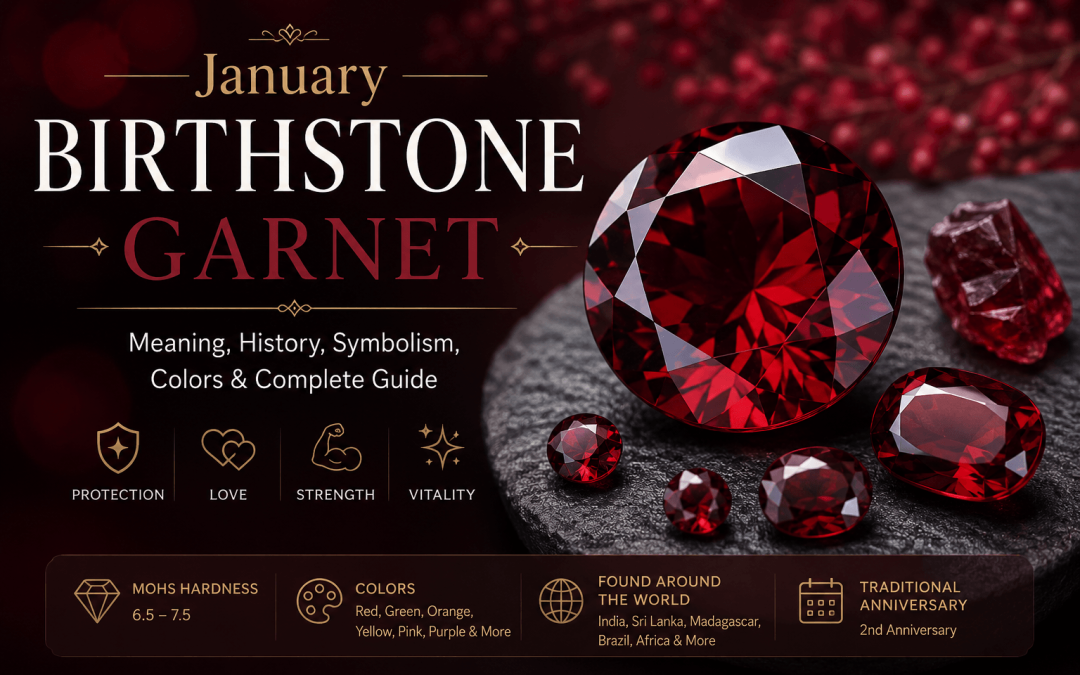
January marks the beginning of a new year, making it fitting that its birthstone represents strength, protection, hope, and fresh starts. The January birthstone is garnet, one of history's oldest and most treasured gemstones. Although most people immediately think of a deep red gem, garnet is actually a fascinating family of minerals found in nearly every color of the rainbow except pure blue.
For thousands of years, civilizations around the world believed garnet could protect travelers, strengthen relationships, inspire courage, and promote prosperity. Today, it remains one of the world's most popular birthstones thanks to its timeless beauty, rich symbolism, impressive durability, and remarkable variety.
Whether you're celebrating a January birthday, choosing meaningful jewelry, or simply curious about birthstones, this guide covers everything you need to know about garnet—from its geological origins and history to its symbolism, colors, value, care, and frequently asked questions.
What Is the January Birthstone?
The official birthstone for January is garnet.
Modern birthstone lists recognize garnet as the gemstone representing everyone born during January. While the modern list was standardized in the early twentieth century, garnet had already been associated with January for centuries because of its rich symbolism, warm appearance during winter, and long-standing reputation as a protective stone.
Garnet is admired for its:
- Rich colors
- Excellent durability
- Long history
- Symbolic meaning
- Wide variety of gemstone species
- Affordability compared to many precious gems
Its combination of beauty and meaning makes it one of the most versatile birthstones available.
Quick Facts About the January Birthstone
| Feature | Details |
|---|---|
| Birthstone | Garnet |
| Birth Month | January |
| Color | Red, green, orange, yellow, pink, purple, brown, rare color-change varieties |
| Hardness | 6.5–7.5 on the Mohs scale |
| Symbolism | Protection, love, vitality, strength, prosperity, friendship |
| Anniversary | Traditional 2nd wedding anniversary gemstone |
| Zodiac Associations | Capricorn and Aquarius |
| Crystal System | Cubic |
What Does the January Birthstone Mean?
Throughout history, garnet has represented some of humanity's most valued qualities.
Protection
Perhaps the most famous symbolism attached to garnet is protection.
Ancient travelers carried garnets believing they would protect them during dangerous journeys. Warriors often wore garnets into battle, while sailors considered the gemstone a lucky charm for safe voyages.
Although modern science does not support these beliefs, the symbolism remains popular today.
Love and Devotion
The deep red color of classic garnets naturally became associated with:
- Romantic love
- Loyalty
- Commitment
- Faithfulness
- Lasting relationships
Many couples choose garnet jewelry because it symbolizes enduring affection rather than temporary passion.
Strength and Courage
January represents the beginning of a new year—a time for resolutions and fresh opportunities.
Garnet perfectly complements this theme by symbolizing:
- Inner strength
- Confidence
- Determination
- Personal growth
- Resilience
Prosperity and Success
Many cultures believed garnet attracted abundance and financial success.
Today, people often wear garnet jewelry as a reminder to pursue goals with confidence and determination.
Why Is Garnet the January Birthstone?
The connection between January and garnet developed over centuries.
Several factors likely contributed:
Winter Symbolism
January is often associated with cold weather, darkness, and new beginnings.
The rich, glowing red of garnet represented:
- Warmth
- Light
- Hope
- Energy
- Renewal
These qualities made it an appropriate gemstone for the first month of the year.
Ancient Traditions
Long before official birthstone lists existed, various cultures assigned gemstones to months based on religious, astrological, and cultural traditions.
Eventually, garnet became firmly linked with January.
Modern Standardization
The modern birthstone list formally recognized garnet as January's birthstone in 1912, helping establish the association used worldwide today.
The Fascinating History of Garnet
Garnet has been treasured for more than 5,000 years.
Ancient Egypt
Egyptians used garnets in:
- Jewelry
- Burial ornaments
- Decorative carvings
- Royal accessories
Pharaohs were often buried with garnet jewelry.
Ancient Rome
Romans frequently carved garnets into signet rings.
These rings sealed important documents using hot wax, making garnet both beautiful and practical.
Medieval Europe
During the Middle Ages, garnet became associated with:
- Protection
- Healing
- Safe travel
- Divine guidance
Knights often carried garnets during military campaigns.
Victorian Era
Victorian jewelry designers embraced garnets because of their rich color and affordability compared to rubies.
Bohemian garnets became especially fashionable throughout Europe.
Is Garnet Only Red?
One of the biggest misconceptions is that garnet only comes in red.
In reality, garnet is a family of closely related minerals with an extraordinary range of colors.
Red Garnet
The most recognizable variety.
Often associated with:
- Passion
- Strength
- Love
Green Garnet
Includes the famous Tsavorite and Demantoid varieties.
These rare garnets are among the world's most valuable green gemstones.
Orange Garnet
Spessartine garnets display vibrant orange tones ranging from golden orange to reddish orange.
Pink Garnet
Some garnets exhibit delicate pink shades ideal for feminine jewelry.
Purple Garnet
Certain garnets combine red and violet tones for a luxurious appearance.
Brown Garnet
Earthy brown varieties are less common in jewelry but popular among collectors.
Color-Change Garnet
Among the rarest gemstones on Earth, these garnets appear green in daylight but shift toward reddish or purple hues under incandescent light.
Different Types of Garnet
Several garnet species are commonly used in jewelry.
Almandine
The most common garnet.
Known for:
- Deep red color
- Excellent durability
- Affordable pricing
Pyrope
Often displays an intense crimson color.
Sometimes confused with ruby due to its vivid appearance.
Rhodolite
A beautiful blend of pyrope and almandine.
Recognized for:
- Raspberry hues
- Purple-red colors
- Exceptional brilliance
Spessartine
Bright orange garnet sometimes called "Mandarin Garnet."
Tsavorite
One of the rarest garnets.
Its vibrant green color rivals emerald.
Demantoid
Highly prized among collectors.
Famous for:
- Exceptional sparkle
- High rarity
- Strong investment value
January Birthstone Symbolism Across Cultures
Different civilizations assigned unique meanings to garnet.
Ancient Greece
Associated with:
- Persephone
- Eternal bonds
- Return of spring
Ancient Egypt
Represented:
- Life
- Protection
- Royal authority
India
Traditional beliefs connected garnet with:
- Confidence
- Mental clarity
- Positive energy
Europe
Medieval Europeans believed garnet:
- Protected travelers
- Prevented nightmares
- Strengthened friendships
- Encouraged honesty
Spiritual Meaning of the January Birthstone
Many crystal enthusiasts believe garnet supports emotional well-being.
Common spiritual associations include:
- Grounding energy
- Emotional stability
- Increased motivation
- Greater confidence
- Passion for life
- Personal transformation
These beliefs belong to spiritual and cultural traditions rather than established scientific evidence.
January Birthstone and Zodiac Signs
January includes two zodiac signs.
Capricorn (December 22 – January 19)
Capricorns are often described as:
- Ambitious
- Responsible
- Practical
- Disciplined
Garnet complements these qualities through its symbolism of perseverance and determination.
Aquarius (January 20 – February 18)
Aquarians are commonly associated with:
- Innovation
- Independence
- Creativity
- Vision
Garnet represents the confidence and energy often connected with pursuing original ideas.
January Birthstone and Birth Flowers
January has two traditional birth flowers:
Carnation
Symbolizes:
- Love
- Admiration
- Distinction
Snowdrop
Represents:
- Hope
- Renewal
- Optimism
Together with garnet, these symbols reflect new beginnings and resilience during winter.
Where Is Garnet Found?
Garnets are mined throughout the world.
Major sources include:
- India
- Sri Lanka
- Madagascar
- Tanzania
- Kenya
- Mozambique
- Namibia
- Brazil
- United States
- Czech Republic
- Russia
Each location produces different garnet varieties depending on local geology.
How Durable Is Garnet?
With a Mohs hardness between 6.5 and 7.5, garnet is durable enough for everyday jewelry, including rings, pendants, earrings, and bracelets.
However, it should still be protected from:
- Hard impacts
- Abrasive surfaces
- Strong chemicals
Proper care helps maintain its brilliance for decades.
How to Clean and Care for Garnet Jewelry
Keeping garnet beautiful is relatively simple.
Cleaning
Use:
- Warm water
- Mild soap
- Soft toothbrush
- Lint-free cloth
Avoid
- Harsh chemicals
- Bleach
- Strong acids
- Abrasive cleaners
Storage
Store garnet jewelry separately from harder gemstones such as diamonds and sapphires to avoid scratches.
How Much Is January Birthstone Worth?
Garnet prices vary dramatically depending on several factors.
These include:
- Color
- Clarity
- Cut
- Carat weight
- Variety
- Origin
- Rarity
Common red garnets are generally affordable, while rare green varieties such as Tsavorite and Demantoid can command premium prices.
Color-change garnets are among the most valuable because of their exceptional rarity.
Best January Birthstone Jewelry
Garnet works beautifully in almost every jewelry style.
Popular choices include:
Garnet Rings
Classic solitaire designs remain timeless.
Garnet Necklaces
Heart pendants and simple gemstone necklaces make meaningful birthday gifts.
Garnet Earrings
Studs provide everyday elegance, while drop earrings create a more dramatic look.
Garnet Bracelets
Perfect for stacking with other gemstone bracelets.
Personalized Birthstone Jewelry
Custom jewelry featuring initials, names, or family birthstones has become increasingly popular for celebrating milestones.
January Birthstone Gift Ideas
Garnet makes an excellent gift for many occasions.
Popular celebrations include:
- January birthdays
- Second wedding anniversaries
- Graduation
- Valentine's Day
- Mother's Day
- Christmas
- New Year celebrations
- Personal achievements
Its symbolism makes it especially meaningful for someone starting a new chapter in life.
January Birthstone in Modern Jewelry
Today's designers use garnet in both traditional and contemporary collections.
Popular combinations include:
- White gold
- Yellow gold
- Rose gold
- Sterling silver
- Platinum
Minimalist jewelry often features smaller garnets, while vintage-inspired pieces highlight ornate settings that emphasize the gemstone's historical character.
Birthstone Legends and Folklore
Numerous legends surround garnet.
Stories describe the gemstone as:
- A light that guided travelers through darkness
- A protector against danger
- A symbol of everlasting friendship
- A stone that strengthened the heart
- A charm for good fortune
While these stories belong to folklore rather than historical fact, they continue to add to garnet's enduring appeal.
Common Myths About the January Birthstone
Garnet Is Always Red
False.
Garnet naturally occurs in many colors, including green, orange, pink, yellow, and purple.
Garnet Is Rare
Partially true.
Common red garnets are widely available, while certain green and color-change garnets are exceptionally rare.
Garnet Is Too Soft for Everyday Wear
Not necessarily.
Its hardness makes it suitable for daily jewelry when properly cared for.
Garnet Is Only for January Birthdays
Anyone can wear garnet regardless of birth month.
Many people simply appreciate its color, symbolism, and history.
Frequently Asked Questions
What is the January birthstone?
The official January birthstone is garnet.
What does the January birthstone symbolize?
Garnet traditionally represents protection, love, loyalty, strength, vitality, prosperity, and friendship.
Is garnet always red?
No. Garnets occur naturally in red, green, orange, yellow, pink, purple, brown, and rare color-changing varieties.
Is garnet expensive?
Most red garnets are relatively affordable, while rare green and color-change garnets can be considerably more valuable.
Can garnet be worn every day?
Yes. Garnet is durable enough for everyday jewelry when handled with reasonable care.
Which zodiac signs are associated with garnet?
Garnet is commonly linked with Capricorn and Aquarius because both zodiac signs fall within January.
What anniversary is garnet associated with?
Garnet is the traditional gemstone for the second wedding anniversary.
Is garnet a good gift?
Absolutely. Its symbolism of protection, love, resilience, and new beginnings makes it an excellent gift for birthdays, anniversaries, and other meaningful occasions.
Final Thoughts
The January birthstone, garnet, is far more than a beautiful red gemstone. Its remarkable history spans thousands of years, its colors extend well beyond crimson, and its symbolism continues to resonate with people seeking strength, love, protection, and fresh beginnings.
Whether you're drawn to the classic deep-red almandine, the brilliant green tsavorite, or a rare color-change garnet, this versatile gemstone offers timeless elegance backed by centuries of tradition. Its durability, affordability across many varieties, and enduring cultural significance make garnet one of the most meaningful birthstones in the world.
For anyone born in January—or anyone inspired by the themes of renewal and resilience—garnet remains a gemstone that beautifully combines history, symbolism, and lasting beauty.